Expert Tutorials
Code Examples
Industry Analysis
Best Practices

Articles tagged "Amazon Api"

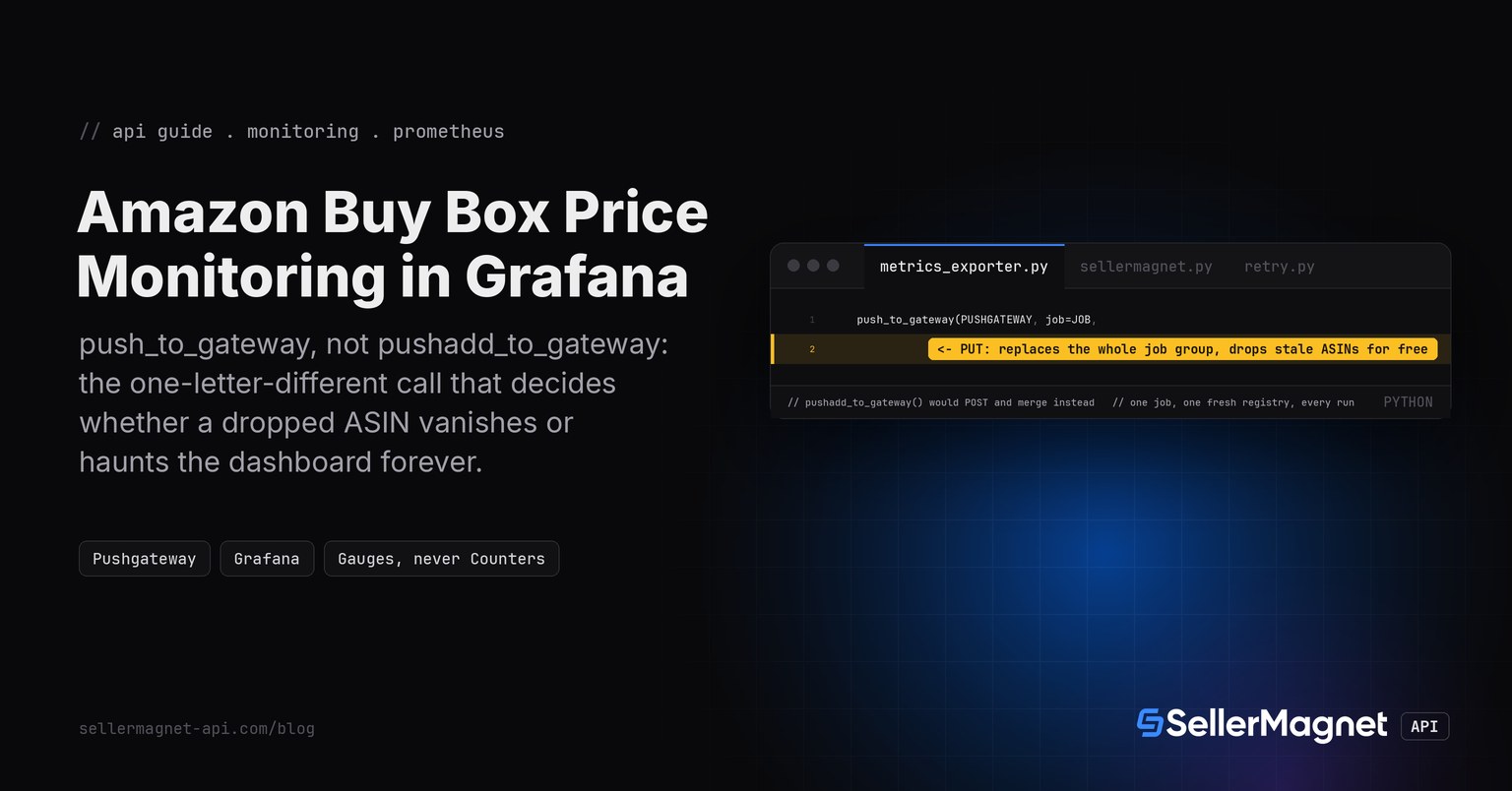
Terminal showing a Python price-watch script pushing Amazon Buy Box metrics to a Prometheus Pushgateway for Grafana

Amazon Buy Box Price Monitoring in Grafana via Prometheus Pushgateway

Push Amazon Buy Box price, availability and offer-count metrics from the SellerMagnet API to a Prometheus Pushgateway, then graph and alert on them in Grafana. sellermagnet.py / retry.py need zero changes from the Python quickstart. The real trap: using push_to_gateway (PUT, a full replace) instead of pushadd_to_gateway (POST, a merge) is what makes a dropped ASIN disappear from the dashboard instead of freezing there forever.
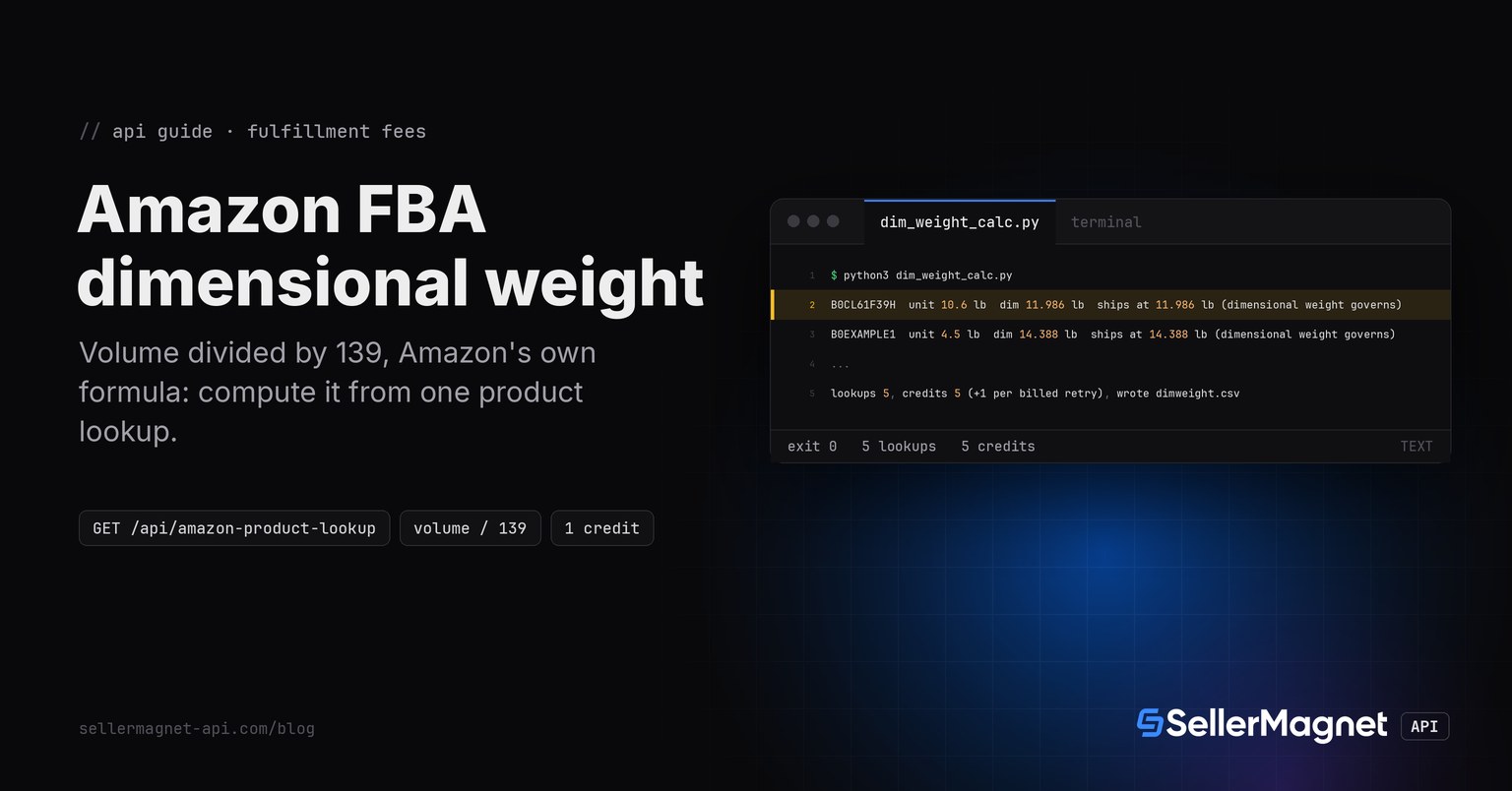
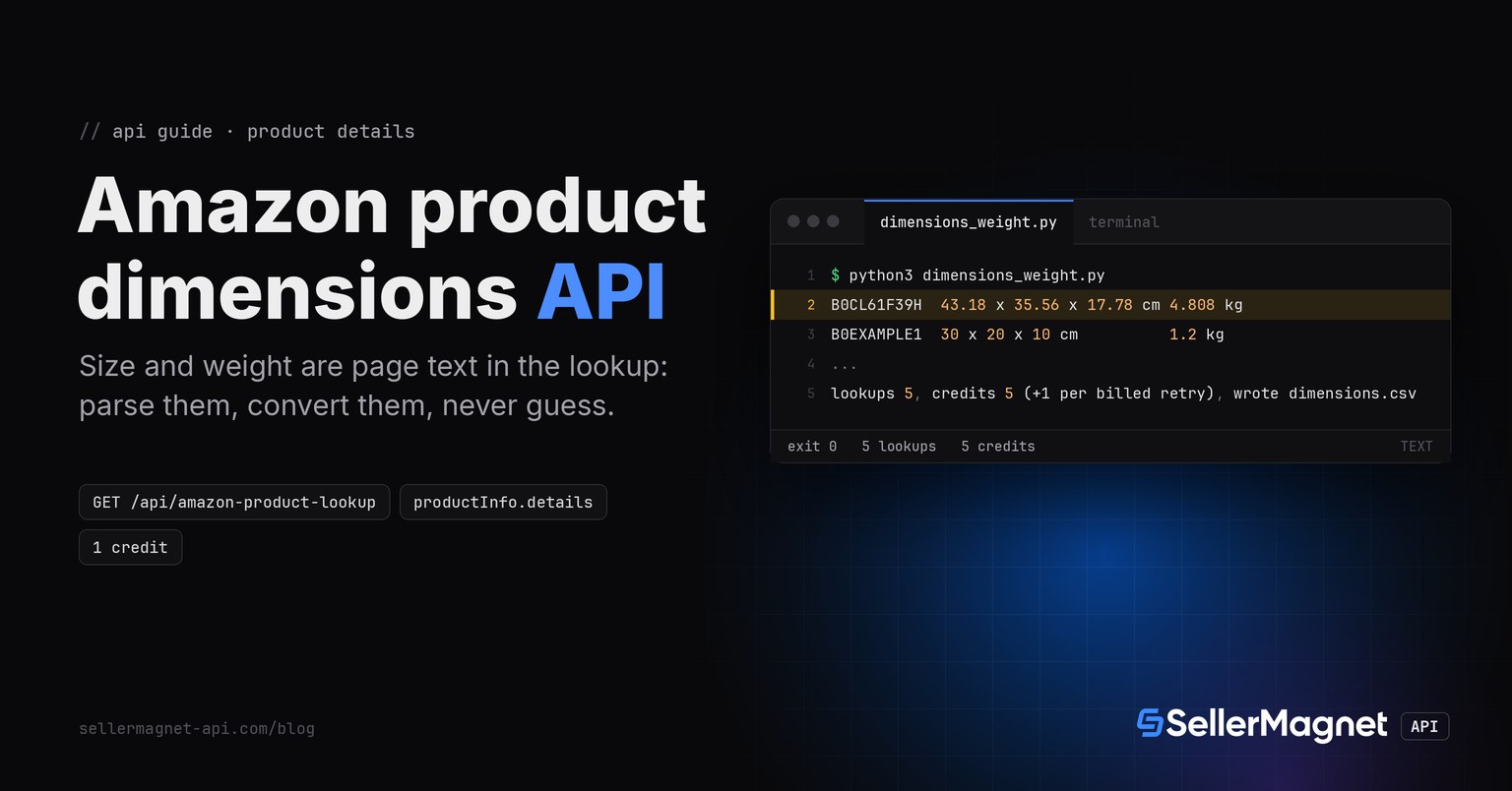
Terminal running a Python script that computes Amazon's FBA dimensional weight from the lookup response and shows which weight governs shipping

Amazon FBA Dimensional Weight Calculator via the API: Volume / 139 in Python

Amazon bills some FBA items on dimensional weight, not scale weight: volume (length x width x height in inches) divided by 139, with a 2-inch floor on bulky items. This guide pulls an item's size and weight from one product lookup, computes the dimensional weight the same way Amazon's own help pages do, and flags which weight actually governs shipping fees.

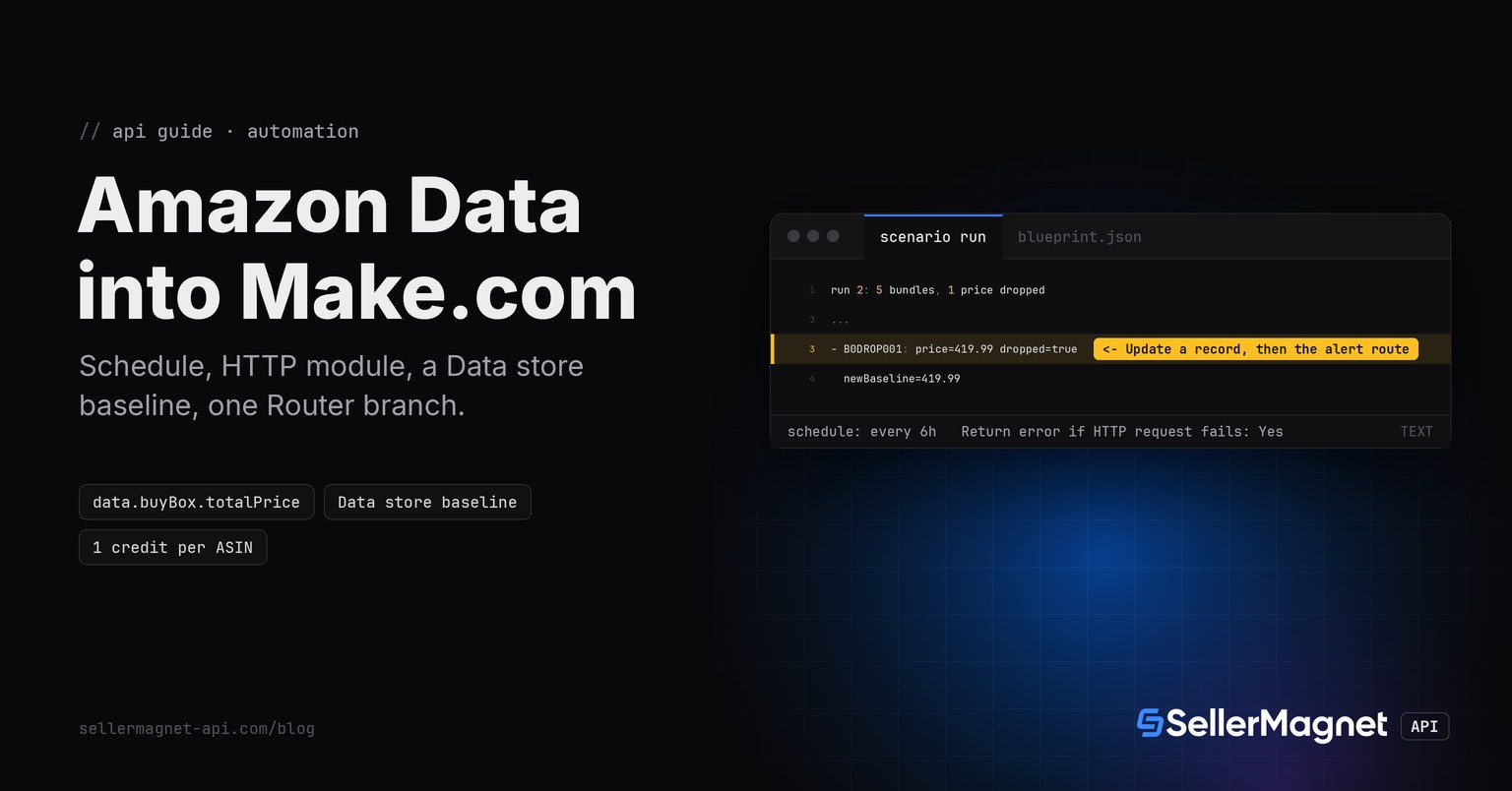
Terminal window running a Make.com scenario that reports an Amazon Buy Box price drop

Amazon Product Data in Make.com: HTTP Module, No Code

Pull Amazon product data into Make.com (formerly Integromat) with the built-in HTTP module: a Schedule trigger, one call to /amazon-product-offers per ASIN, a Data store that holds the last known price, and a Router branch on a Buy Box price drop. Covers the one HTTP module setting that decides whether a billed error ever reaches an error handler at all.

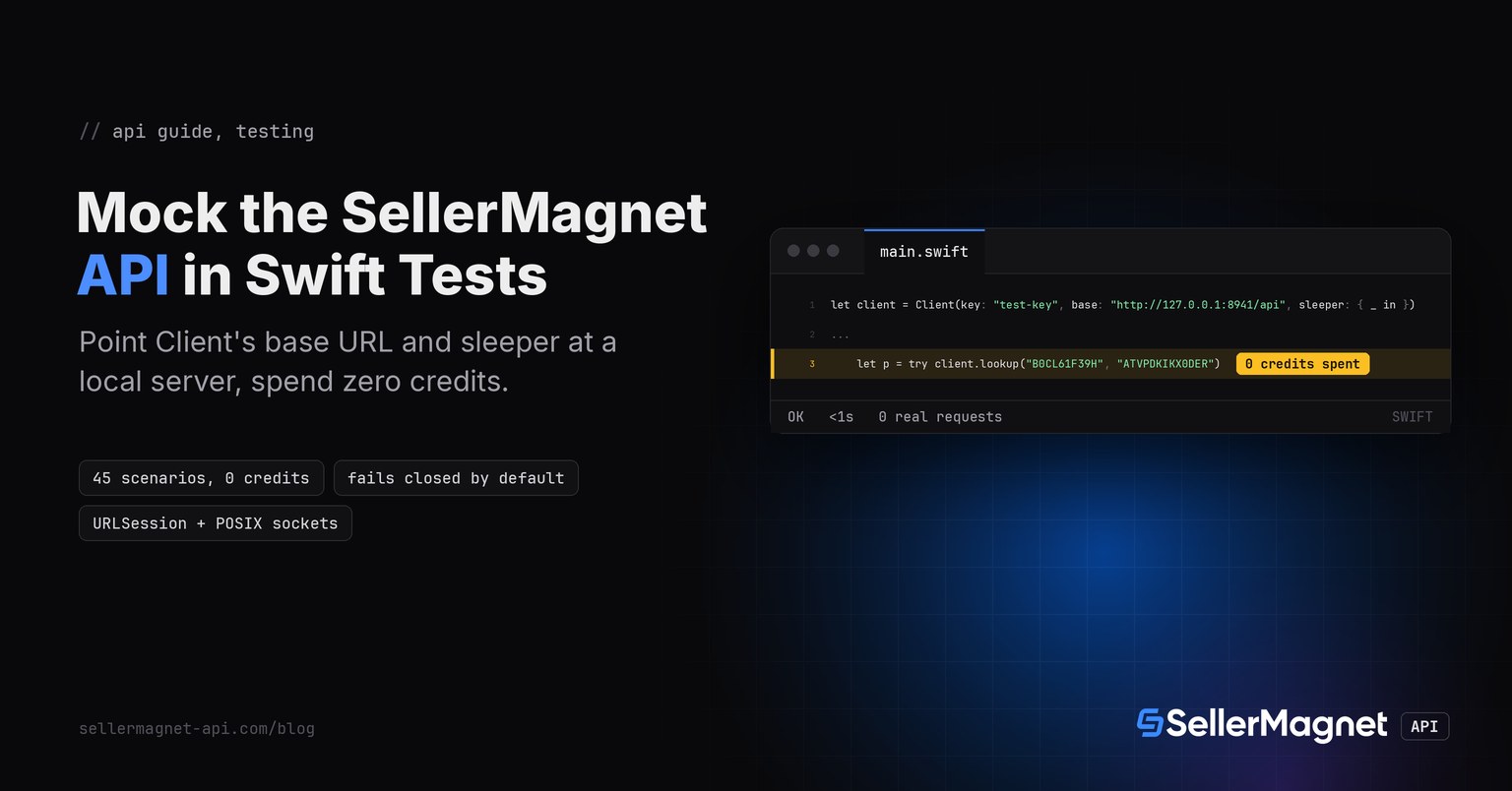
Terminal window showing a Swift test run that fakes the SellerMagnet API behind a local POSIX-socket server while the real URLSession client code runs unchanged

Mock the SellerMagnet API in Swift Tests Without Spending Credits

Test the URLSession client that calls the SellerMagnet API from Swift without hitting it: Client's own base-URL and sleeper constructor parameters already exist for exactly this, point them at a real local POSIX-socket HTTP server, run the real Client.swift / Models.swift from the quickstart unchanged, and cover every billed, free and refunded status code with a 45-scenario suite that runs in well under a second.

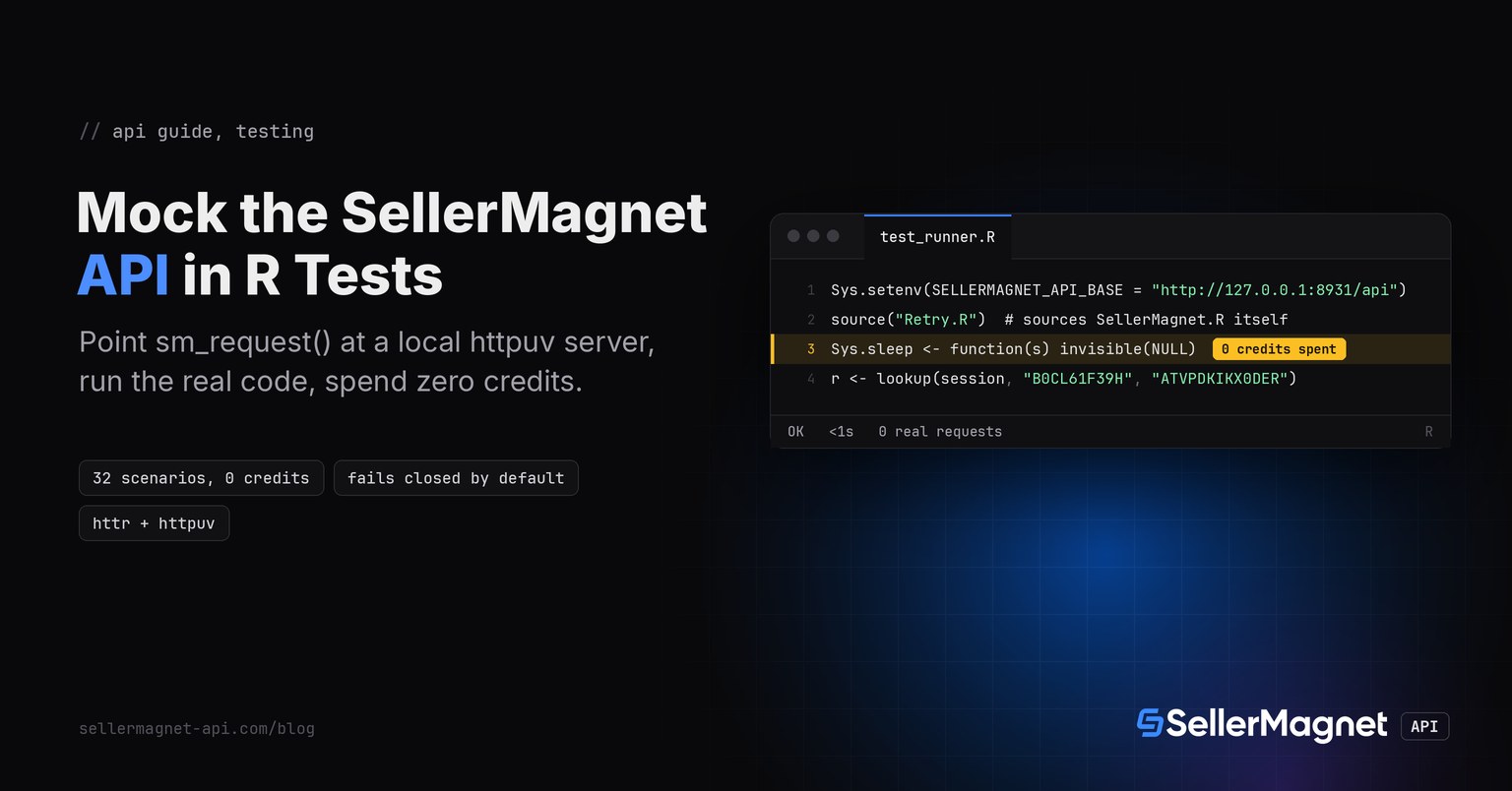
Terminal window showing an R test run that fakes the SellerMagnet API behind a local httpuv server while the real httr/jsonlite client code runs unchanged

Mock the SellerMagnet API in R Tests Without Spending Credits

Test the httr/jsonlite client that calls the SellerMagnet API from R without hitting it: point sm_request()'s own SELLERMAGNET_API_BASE test seam at a real local httpuv server, run the real SellerMagnet.R / Retry.R from the R quickstart unchanged, and cover every billed, free and refunded status code with a 32-scenario suite that runs in well under a second.

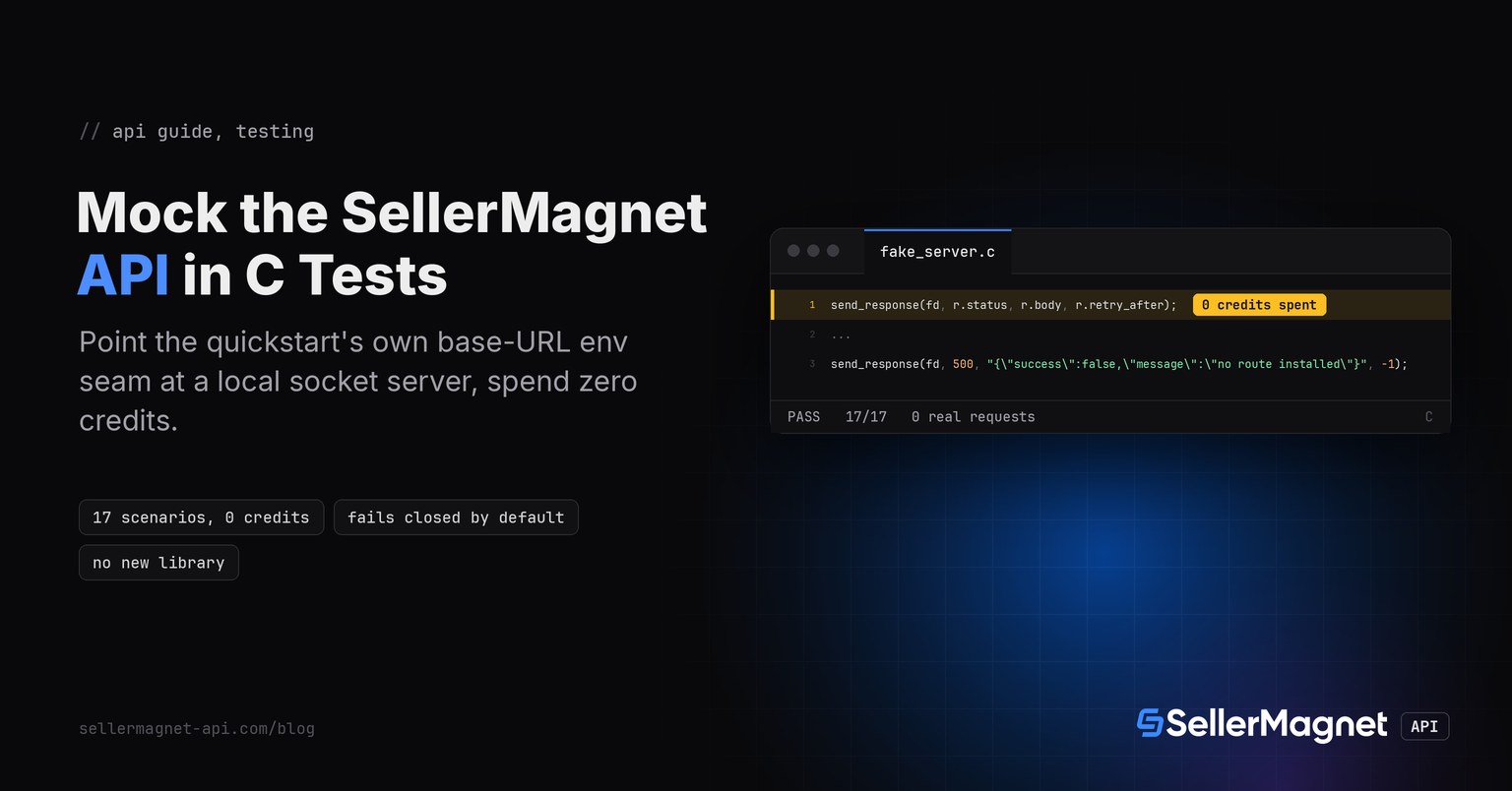
Terminal window showing a C test run that fakes the SellerMagnet API behind a local POSIX socket server while the real libcurl client code runs unchanged

Mock the SellerMagnet API in C Tests Without Spending Credits

Test the C client that calls the SellerMagnet API without hitting it: point the C quickstart's own SELLERMAGNET_API_BASE environment seam at a ~100-line local POSIX socket server, run the real sellermagnet.c / decode.c / retry.c unchanged, and cover every billed, free and refunded status code with a 17-scenario suite that needs nothing beyond gcc, libcurl and json-c.

Power Your Business with Amazon Data

Join thousands of developers using SellerMagnet API for real-time Amazon product intelligence. Start extracting data in minutes.

150 free API credits • No credit card required • Cancel anytime